
Material handling is the backbone of industrial operations, but true operational efficiency is found above the facility floor. Overhead material handling systems maximize unused vertical space to safely lift, position, and transport heavy loads throughout your workflow.
Unlike horizontal, floor-based setups that rely on forklifts, automated guided vehicles (AGVs), or standard floor conveyors, overhead systems operate entirely above the workspace. By shifting the heavy lifting to the ceiling and structural support columns, facilities can dramatically increase their usable footprint and streamline production.
Whether you are upgrading an existing assembly line or designing a brand-new facility, this guide explores how transitioning to vertical and overhead solutions can revolutionize your safety, compliance, and daily throughput.
The Operational Advantages of Going Overhead
Standard lifting equipment is rarely sufficient for specialized industrial applications. Implementing a purpose-built overhead system provides three massive advantages to heavy industry:

Floor-based traffic requires wide, dedicated driving lanes. Overhead systems remove this congestion, freeing up valuable square footage for additional manufacturing cells or high-density storage.

Moving loads overhead drastically reduces the risk of forklift-related collisions and pedestrian accidents on the shop floor. Furthermore, ergonomic lifting systems eliminate the push/pull strain that leads to operator injury.

Modern hoist systems equipped with Variable Frequency Drives (VFDs) provide exact, pinpoint positioning. This is critical for delicate operations, such as pulling heavy engines in fleet maintenance or precisely mating aerospace components.
Types of Overhead Handling Systems
Choosing the right equipment is an exact science. A comprehensive overhead handling system is often composed of several integrated product categories, each designed for a specific structural and load-bearing purpose.
Overhead Cranes
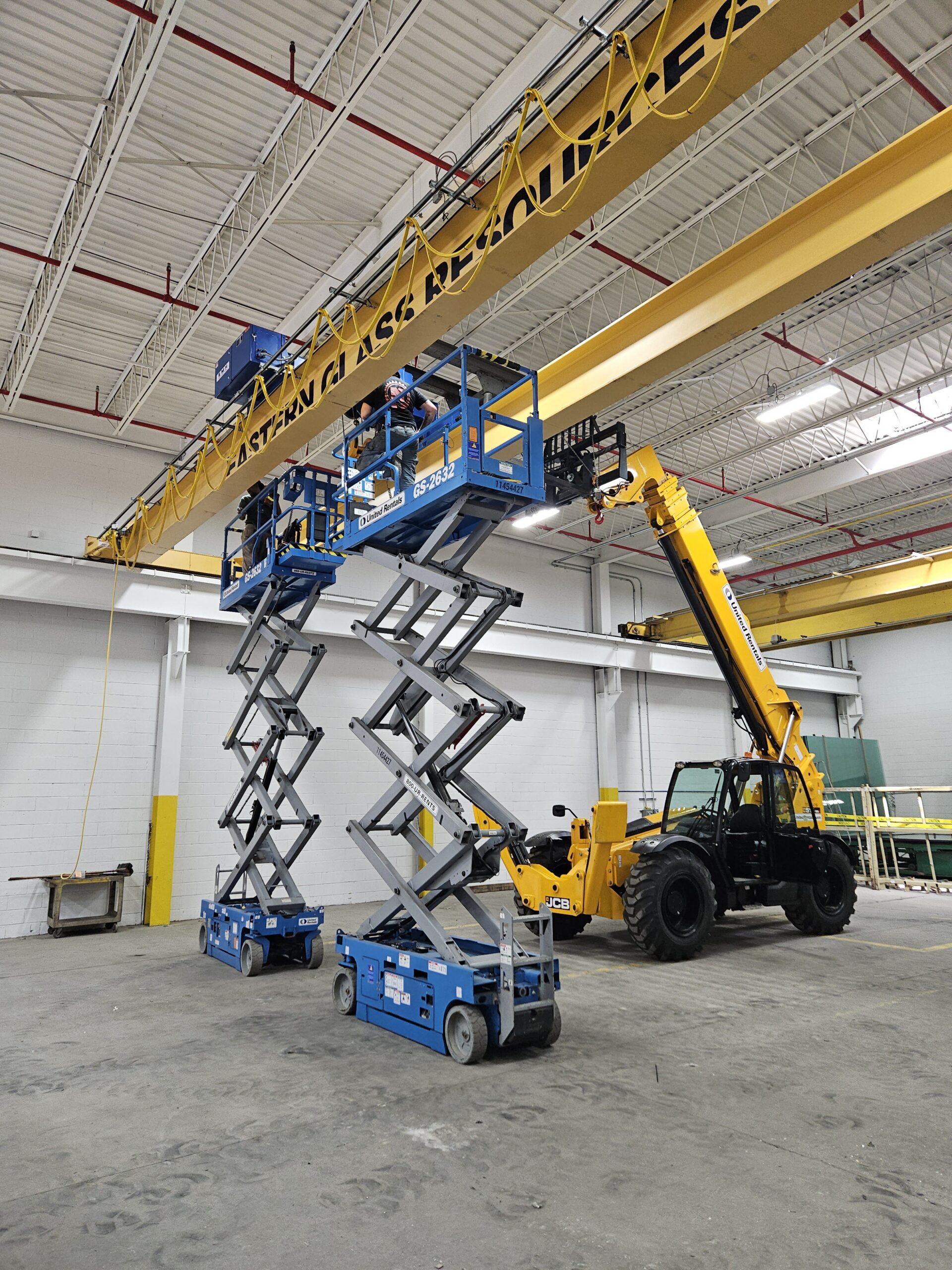
Overhead cranes can provide facility-wide coverage in a wide range of duty classes. They operate in three-directional axes, allowing you to move light to large tonnage loads anywhere within the crane’s footprint. Variations include top-running double girder cranes for heavy lifting capacities, under-running systems typically designed for light to medium lifting capacities, and floor traveling gantry cranes for a simple and fast solution.
Hoists and Trolleys
If the crane is the skeleton, the hoist is the muscle. The hoist is the specific component responsible for the vertical lifting and lowering of the load. The trolley is the wheeled mechanism that suspends the hoist and traverses back and forth across the crane’s bridge beam. While they can be purchased separately, they are most often utilized together as a single functional unit.
Monorail & Patented Track Systems
Not all lifting requires a full bridge crane. Monorail systems utilize a single stationary beam to move materials along a specific, fixed route. For high-cycle, continuous production lines, Patented Track solutions offer hardened steel rails designed to handle heavy, repetitive wheel loads without the peening or wear associated with standard structural steel.
Vertical Reciprocating Conveyors (VRCs)
When you need to move freight between mezzanines or multi-level facility floors, Vertical Reciprocating Conveyors are the standard. It is vital to note that VRCs are specialized material lifts; they are strictly engineered for moving product and inventory, and are not designed for moving people. Many times converting an older elevator to a VRC is a cost cutting solution for keeping production moving.
Industrial Manipulators & Below-The-Hook Devices
A hoist can only lift what it can hold. Slings, spreader beams, and custom below-the-hook devices safely secure specialized or awkwardly shaped loads to the hoist hook. For highly ergonomic workstation tasks, Industrial Manipulators provide rigid, guided lifting to help operators effortlessly pitch, roll, or rotate complex parts.
OSHA Compliance and System Safety
Because overhead material handling deals with suspended loads and heavy tonnage, strict regulatory adherence is non-negotiable. Systems that fail to meet standards set by OSHA, ANSI, and the CMAA (Crane Manufacturers Association of America) expose workers to extreme hazards and companies to severe regulatory penalties.
The 2022 Dynamic Load Testing Mandate
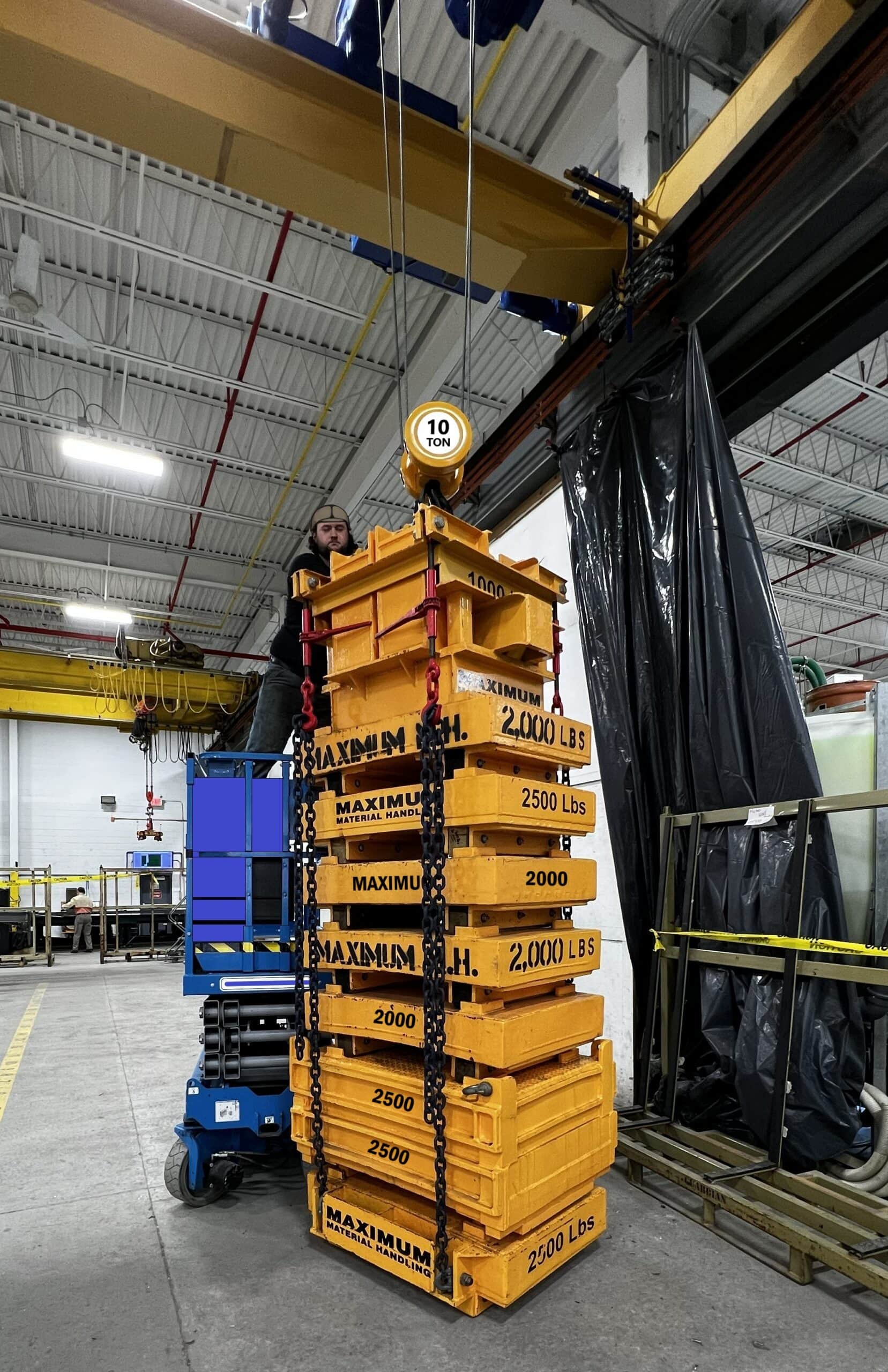
Staying compliant requires staying up to date. In 2022, OSHA and the CMAA issued a critical update making load testing mandatory for all new overhead crane installations. Before a newly installed crane can be placed into operation, it must undergo a documented load test that meets the standards set forth by the ASME B30.2 specifications for structural and operational integrity.
Operator Training & Routine Inspections
Beyond installation, a culture of safety drives productivity. Operators must be trained on proper rigging techniques and daily visual inspections. Furthermore, qualified service professionals must conduct comprehensive routine inspections to identify safety concerns, worn or damaged components , alignment issues and electrical deficiencies before they cause injury or catastrophic failure.
Maximizing Your System's Lifespan
A well-designed overhead system is a sizable investment that should perform reliably for decades. Maximizing that lifespan requires proactive care not reactive fixes:
- Preventative Maintenance: Regular lubrication of moving parts, gearboxes, and bearings prevent untimely wear. Periodic adjustment of brakes and drive components assure maximum service life and replacement of minor electrical elements ensure major electrical components won’t fail prematurely.
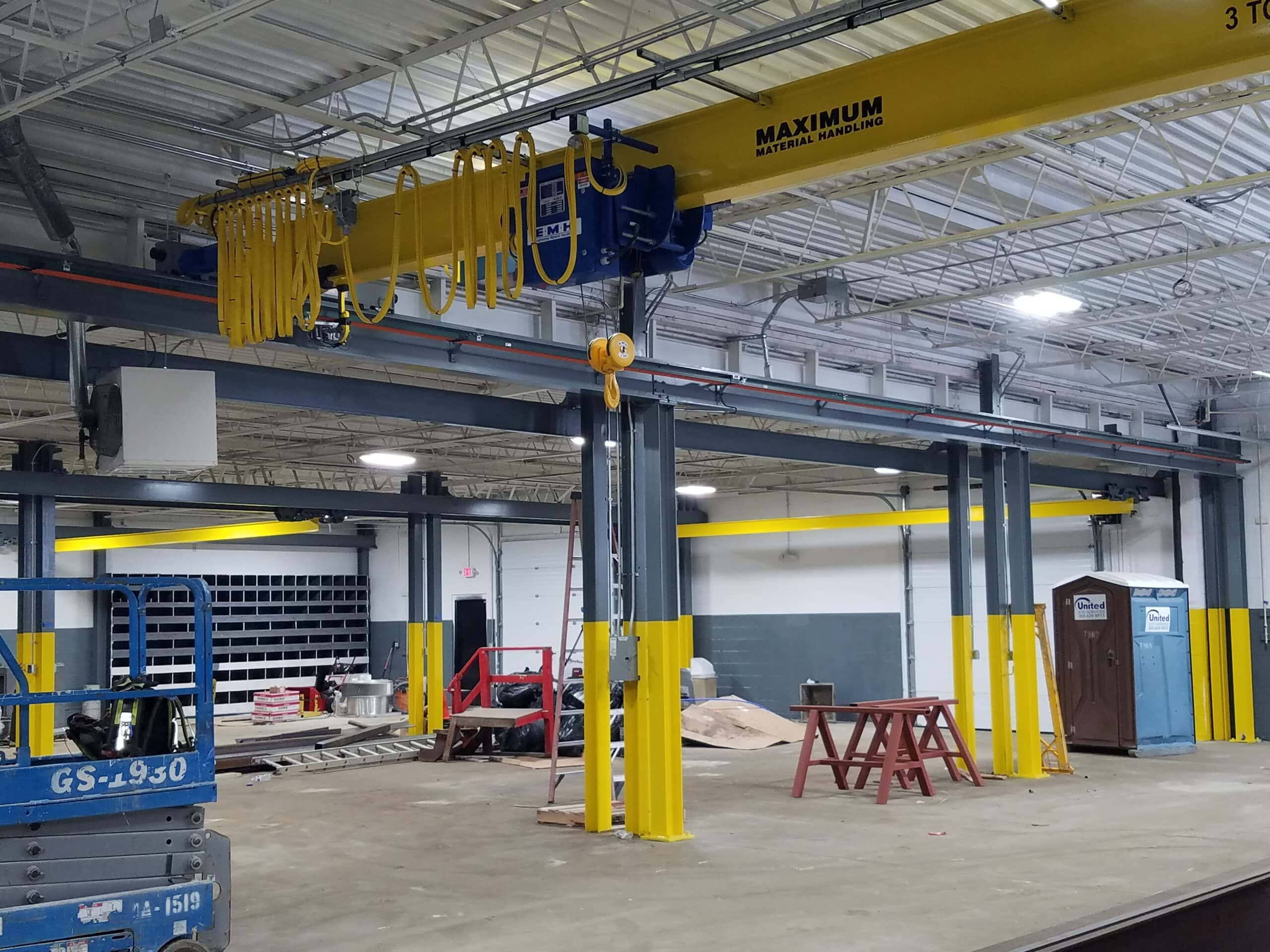
- Equipment Modernization: Replacing equipment can be a costly expense. Modernization in many cases can be a cost effective alternative. The industrial landscape is replete with many older systems built during a time of robust design and unmatched quality. Using innovations available today we can upgrade a system to perform far better than could be imagined yesterday. By overhauling the mechanical, updating the electrical and installing a little TLC, we can turn an unsafe and unreliable liability into an effective and efficient asset. Sometimes the future of your company’s productivity can be found in the past. You just need to look for it.
Partner with an Expert Systems Integrator
Designing and installing overhead material handling systems is a pursuit that requires practice and perspective. You need more than an equipment catalog; you need a partner with the potential to see your vision become a reality.
Maximum Material Handling is a full-service, turnkey partner. We take projects from initial site evaluations and system design to expert equipment installation. We utilize our decades of experience, well earned knowledge and unmatched capabilities to see that your goals are realized.
Long after the installation is complete, our certified technicians serve as an authorized warranty and repair center, providing routine OSHA inspections, preventative maintenance, repairs, load testing and rapid response support for the industry’s leading manufacturers.